
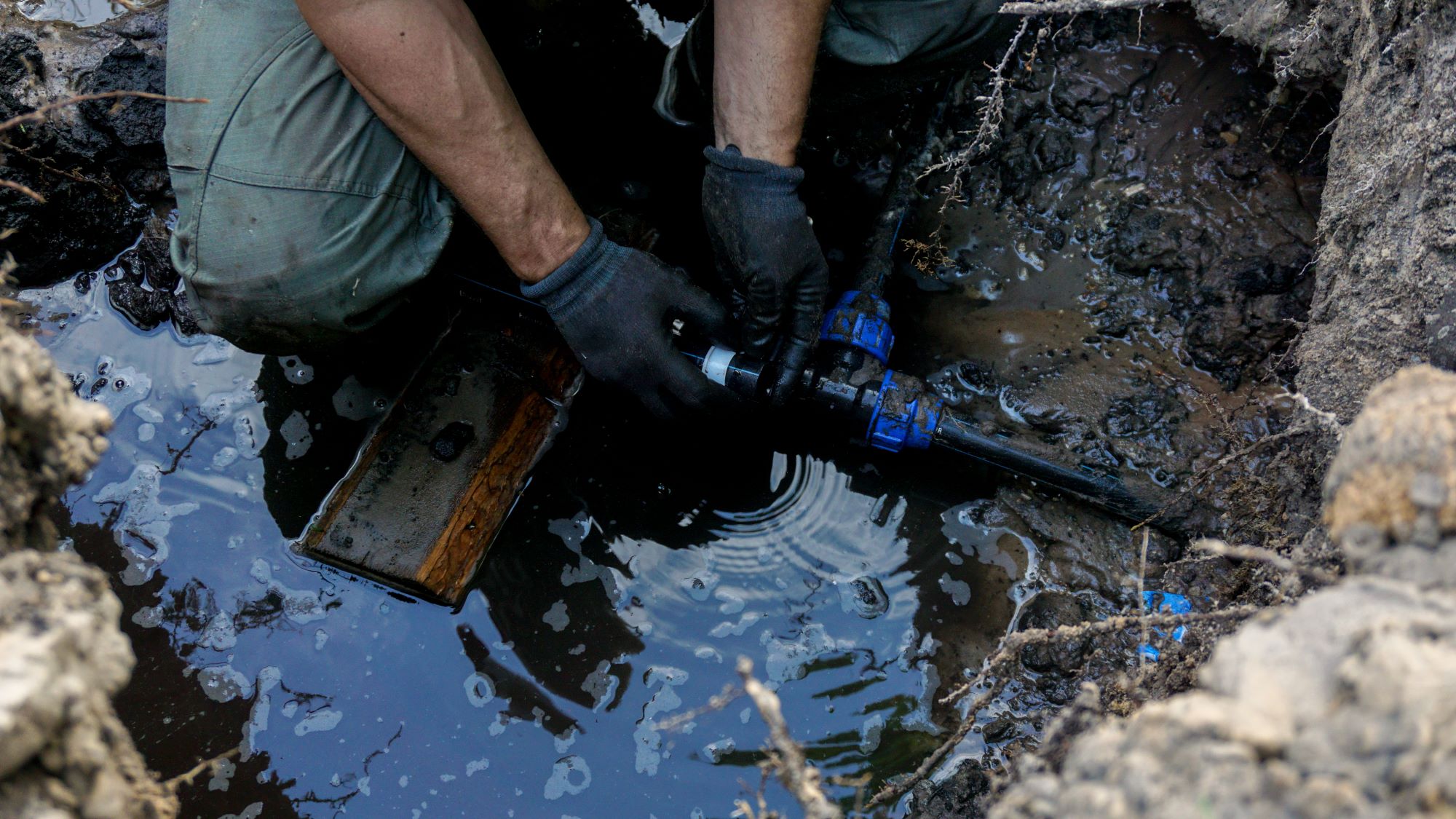
What can I do if I believe I have a leak, but I cannot find a single drop of water?
This is a question home and business owners ask us every week. Maybe your water bill doubled this month, your boiler keeps losing pressure, or there is a persistent “rotten egg” sewer odor lingering in your basement. When traditional visual inspections fail, tearing up drywall or jackhammering a concrete slab is an expensive and destructive way to guess where the problem lies.
For property owners along the Wasatch Front, shifting soils and extreme freeze-thaw cycles make hidden plumbing failures incredibly common. To pinpoint these invisible issues without destroying your property, leak detection specialists rely on several advanced diagnostic methods. This article showcases two solutions: Plumbing Smoke Testing and Tracer Gas Leak Detection.
Here is how these non-destructive technologies work and which one is right for your home.
A plumbing smoke test is a diagnostic method used to locate leaks in unpressurized plumbing systems, specifically the Drain, Waste, and Vent (DWV) lines.
If water is leaking out of a drainpipe, or if hazardous sewer gases (like methane and hydrogen sulfide) are seeping into your living space, smoke testing provides an exact visual marker of the failure point.
How Smoke Testing Works
Common Issues Found with Smoke Testing:
You cannot pump lightweight smoke into a high-pressure water supply line to find a leak. For hidden leaks in lines carrying potable water, professionals use tracer gas.
Tracer gas leak detection is a non-invasive method used to find microscopic pinhole leaks in pressurized water supply lines, underground mains, and hydronic heating systems.
How Tracer Gas Testing Works
Common Issues Found with Tracer Gas:
To help determine which diagnostic tool your property requires, use this quick-reference guide based on the symptoms you are experiencing:
Diagnostic Tool | Target System | Symptoms You Will Notice | Operating Environment |
Smoke Testing | Drain & Vent Lines (DWV) | Sewer odors, smells after heavy rain, ceiling stains under bathrooms | Unpressurized / Gravity |
Tracer Gas Testing | Potable Water & Heating Lines | High water bills, spinning water meter, warm spots on concrete floors, boiler pressure loss | Highly Pressurized |
The greatest advantage of both smoke testing and tracer gas detection is non-destructive pinpointing.
Before these technologies existed, finding a hidden leak meant exploratory demolition. Plumbers would cut multiple holes in ceilings and drywall to chase a venting issue, or unthinkingly jackhammer expensive concrete slabs hoping to hit the leaking water line.
Advanced leak detection removes the guesswork. By accurately marking the exact square inch of the failure, repair crews can perform targeted, surgical fixes. This drastically reduces secondary property damage, cleanup time, and overall repair costs.
Hidden leaks do not fix themselves. Over time, escaping water will erode foundational soil, while escaping sewer gases will severely impact your indoor air quality. If you are dealing with unexplained water loss or persistent odors, standard plumbing checks are not enough.
Protect your property with advanced diagnostics. Contact the specialists at Utah Leak Detection to deploy professional-grade tracer gas and vapor testing across your Salt Lake Valley home or commercial facility today.