
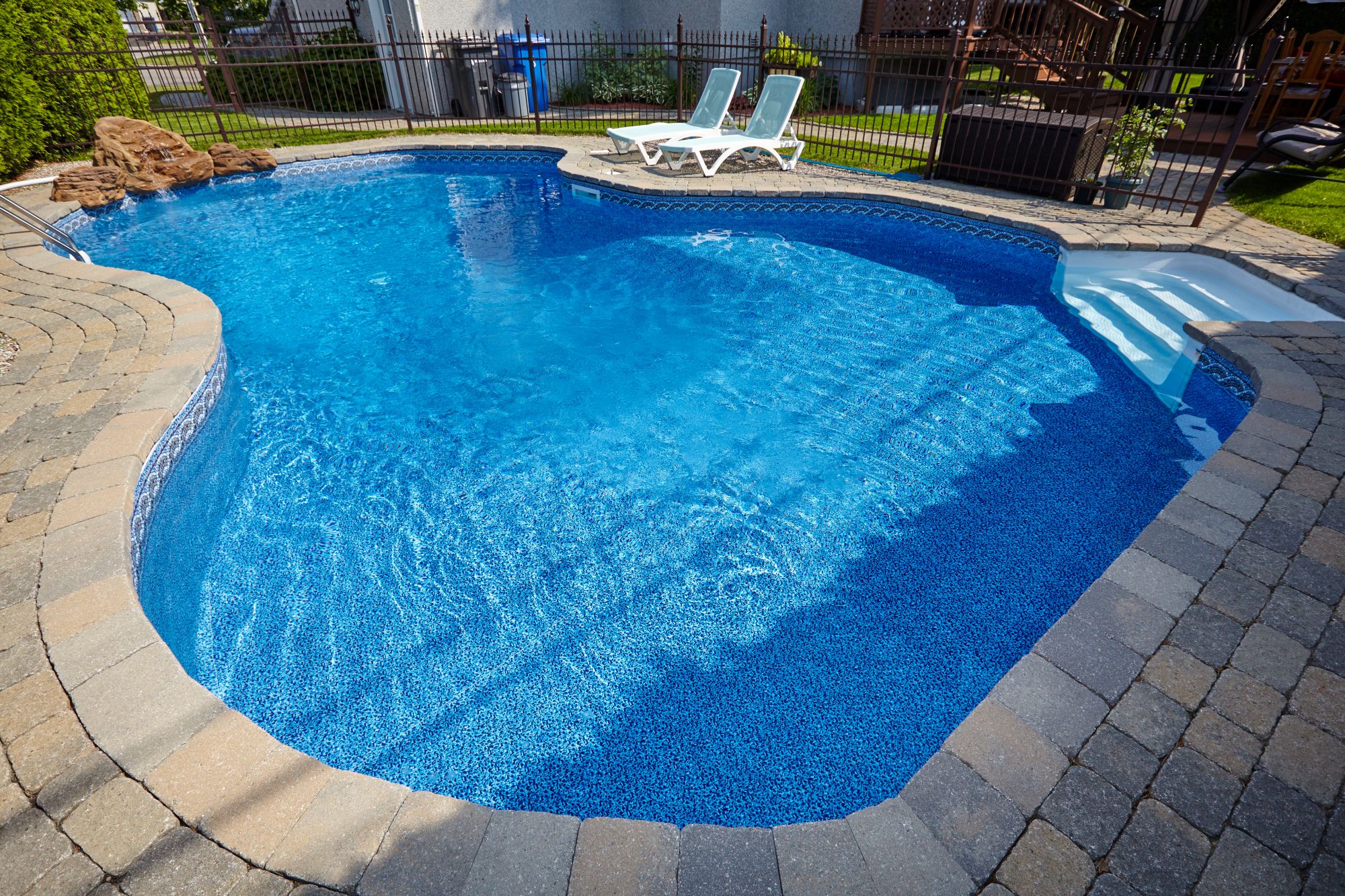
Spring in Utah is… unpredictable. One day you’re shoveling six inches of slush in Midvale, and the next, you’re looking at your pool cover and dreaming of July. But here along the Wasatch Front, that back-and-forth weather, the freeze-thaw cycle, is actually your pool’s biggest enemy.
Water expands when it freezes, and in a Utah winter, it does that dozens of times. If you drop the garden hose in and start filling, you might be throwing money down a literal (underground) drain.
Don’t fill it yet. Inspect the skimmer for hairline cracks, check if the deck has shifted, and look for weird wrinkles in the liner. If your water level dropped more than a few inches since October, you’ve got a leak. Finding it now, while the pool is empty, is significantly cheaper than paying a $400 water bill and a service call later.
Before you even touch the cover, take a slow walk around the pool deck. Utah soil is notoriously shifty.
Each pool material handles a Salt Lake winter differently.
The skimmer is usually the first thing to break when the temp hits zero.
“Is my water loss just evaporation?“ In Salt Lake, we do have dry air, but you shouldn’t lose 6 inches of water over a cold winter. If the level is below the skimmer, you leak—likely in the light niche or the liner.
“Can I just use a DIY leak-seal liquid?“ You can, but in Utah, it’s a temporary band-aid. Our temperature swings will eventually make that crack flex and reopen. It’s better to fix it right before the 100-degree days hit.
“When should I officially open?“ Most people wait for the “65-degree rule.“ Once daytime temps are consistently in the mid-60s, get that cover off. If you wait until it’s 80, you’ll be opening up a bowl of green algae soup.
Opening your pool in the valley is a gamble. Our soil moves, our water freezes deep, and our hard water is tough on equipment. Take twenty minutes to do a thorough inspection before you start the pump.
Think you found a problem? Give us a shout at Utah Leak Detection. We’d rather help you find a small leak now than help you fix a collapsed deck in July.