
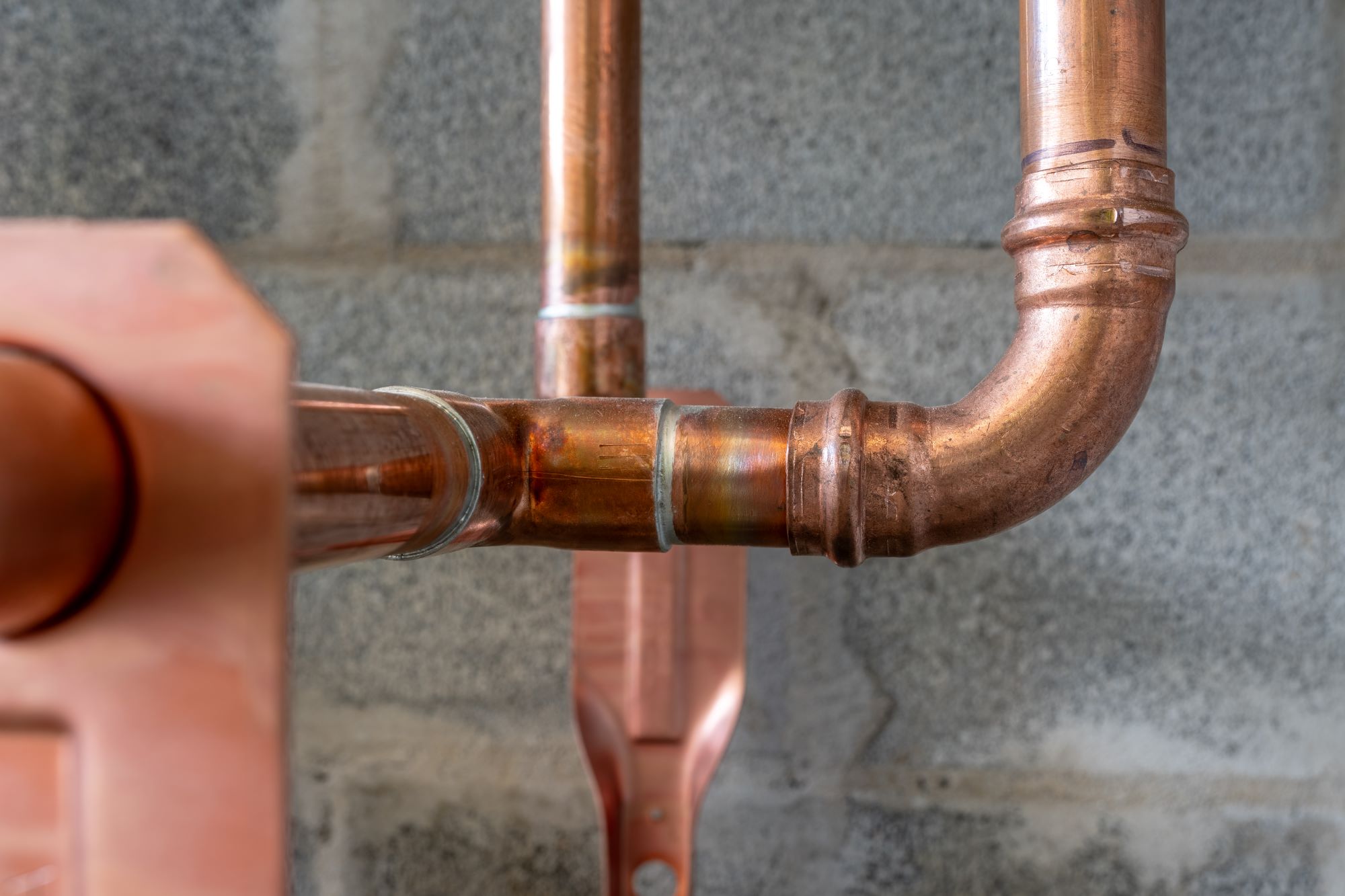
If you live along the Wasatch Front, you’re probably used to the winter routine: cranking the furnace, de-icing the driveway, and making sure the guest room on the north side of the house isn’t freezing. But there is a much quieter threat hiding behind your drywall right now. We are talking about the small, hard-to-notice water leaks that occur as temperatures drop and fluctuate during the cold season.
At Utah Leak Detection, we see it every January. We call it the “Pinhole Problem.” It’s a specific type of plumbing failure caused by a nasty combination of Utah’s mineral-heavy water and the way metal reacts to our extreme desert cold.
To understand why this happens, you have to look at what’s actually living inside your pipes. If you’ve ever looked inside a kettle or seen the crust on your showerhead, you have seen the effects of hard water. In fact, Utah is famous for its ‘hard’ water. According to USGS data, our state has some of the highest mineral concentrations in the country. Over the years, those minerals (calcium and magnesium) settle inside your plumbing system, forming a brittle, rock-like lining called “scale.”
During a cold snap, physics takes over. When your pipes get chilly, the metal naturally shrinks. But that rock-hard mineral scale, that doesn’t move. As the pipe contracts against that rigid mineral lining, the scale can crack or flake off. These tiny, sharp mineral shards can actually scrape the interior of the pipe. Combine that with the physical stress of the metal “squeezing“ against the minerals inside, and you get a tiny fracture.
The result usually isn’t a flood. It’s a pinhole leak.
Most homeowners assume that if their pipes leaked, they’d know it. But pinhole leaks are deceptive. Because the hole is literally the size of a needle tip, the water doesn’t gush out; it mists or drips, one drop at a time.
In many Utah homes, these leaks occur in pipes running through “unconditioned“ spaces. This includes areas such as your crawlspace, the attic, or the exterior-facing wall in the laundry room. Since the drip is so small, you won’t see a drop in water pressure, and your monthly bill might only go up by the price of a cup of coffee.
But here is the catch: that tiny, constant moisture is soaking into your insulation and rotting your wooden studs. By the time you notice a faint musty smell or a small yellow ring on your ceiling, the issue has likely been going on for weeks or months.
Since we don’t have X-ray vision, we have to look for the subtle clues that the hard water is winning the battle:
At Utah Leak Detection, we use cutting-edge tools to locate leaks behind your walls without having to take a hammer to them. We can find the exact source of that needle-sized leak and offer repair solutions to protect your home or business from further damage.
If you are a home or business owner who has survived a few Utah winters, it’s worth keeping an eye out. If something feels “off“ with your plumbing this month, give us a call. We’ll find the leak, save your drywall, and keep your home dry.